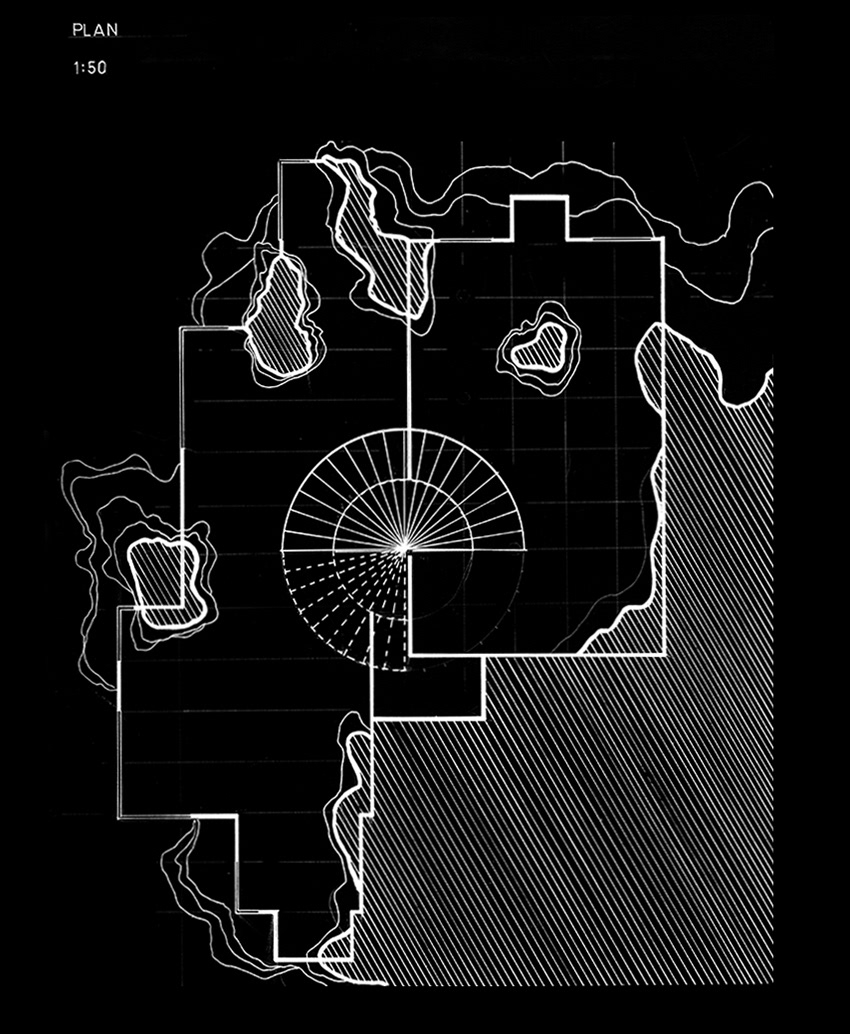
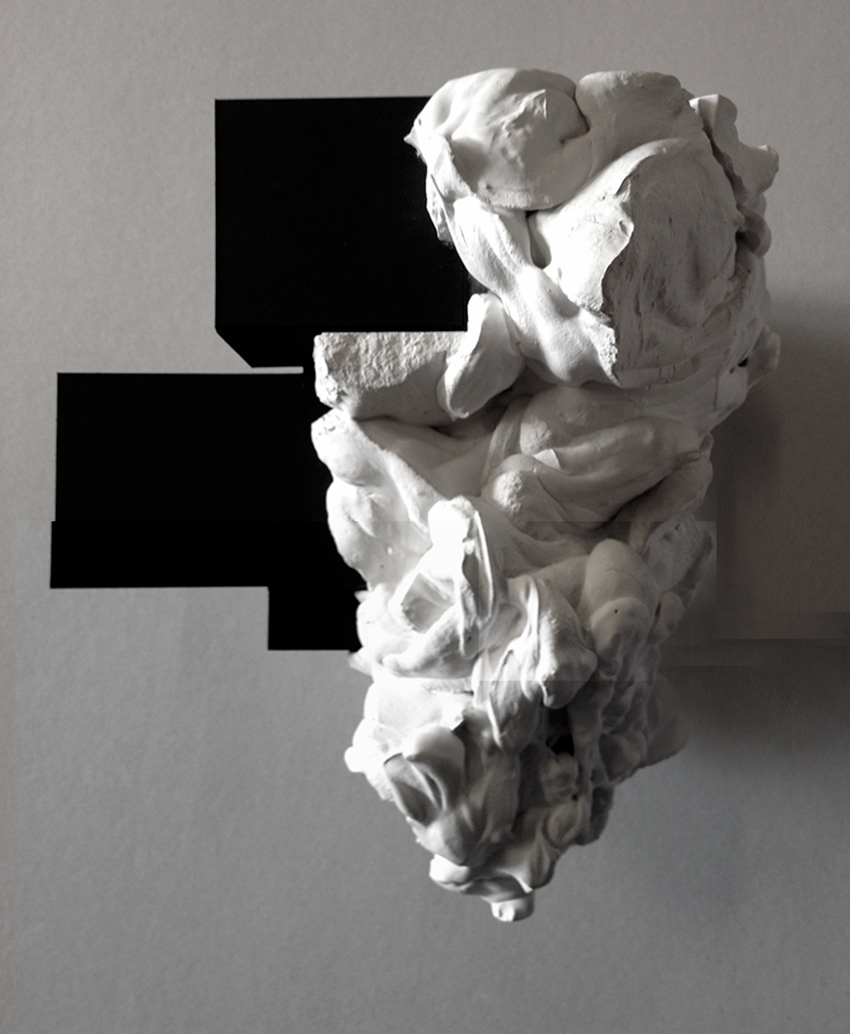
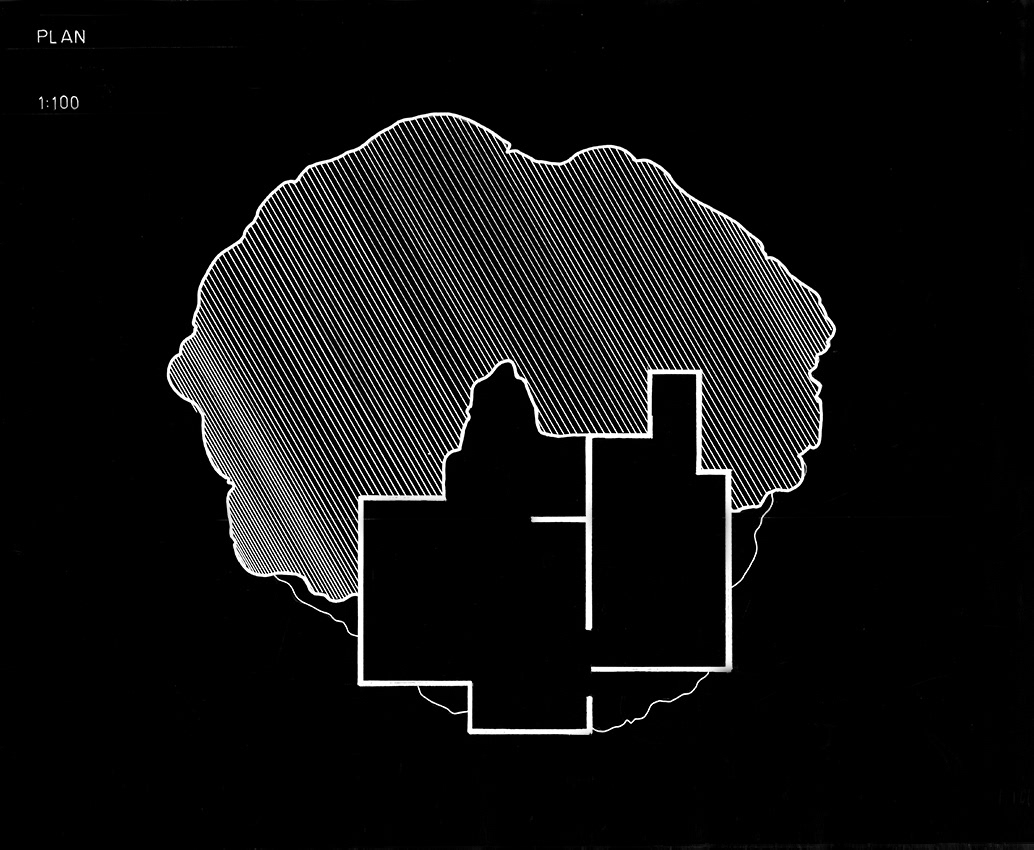
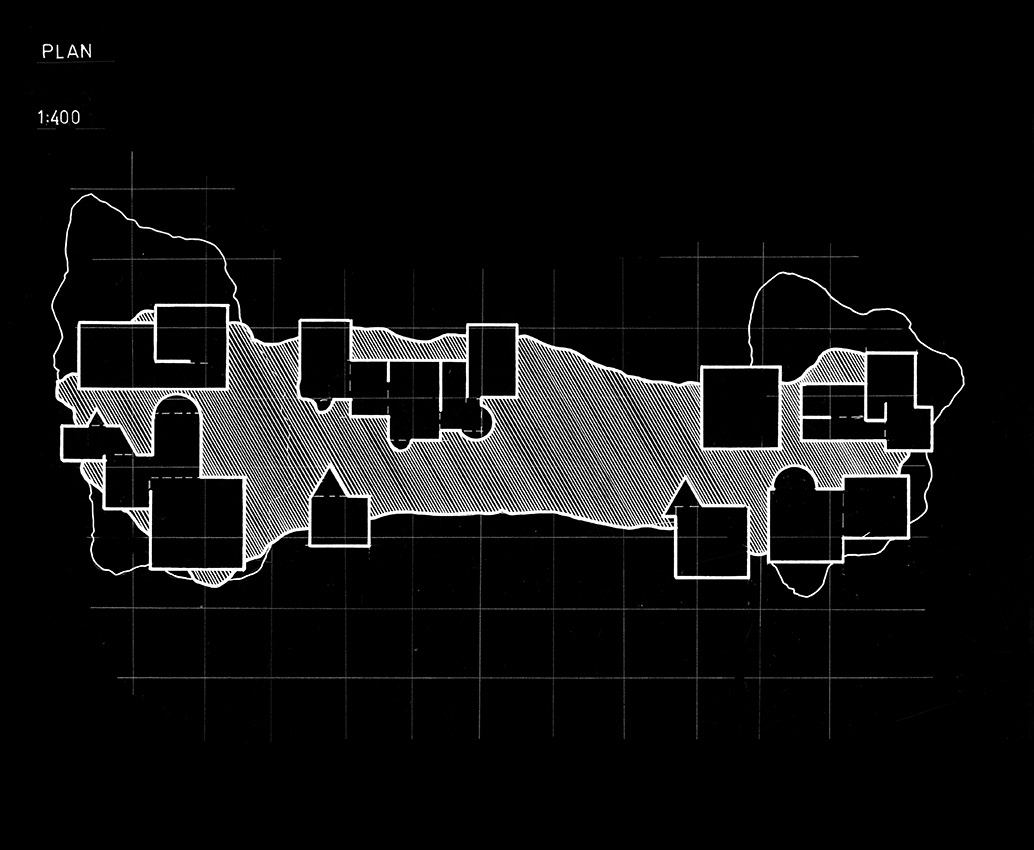
This project investigates the relationship between housing and climate through the design of a 300 m² urban building section. The concepts of activity, structure, and site have guided the spatial exploration.
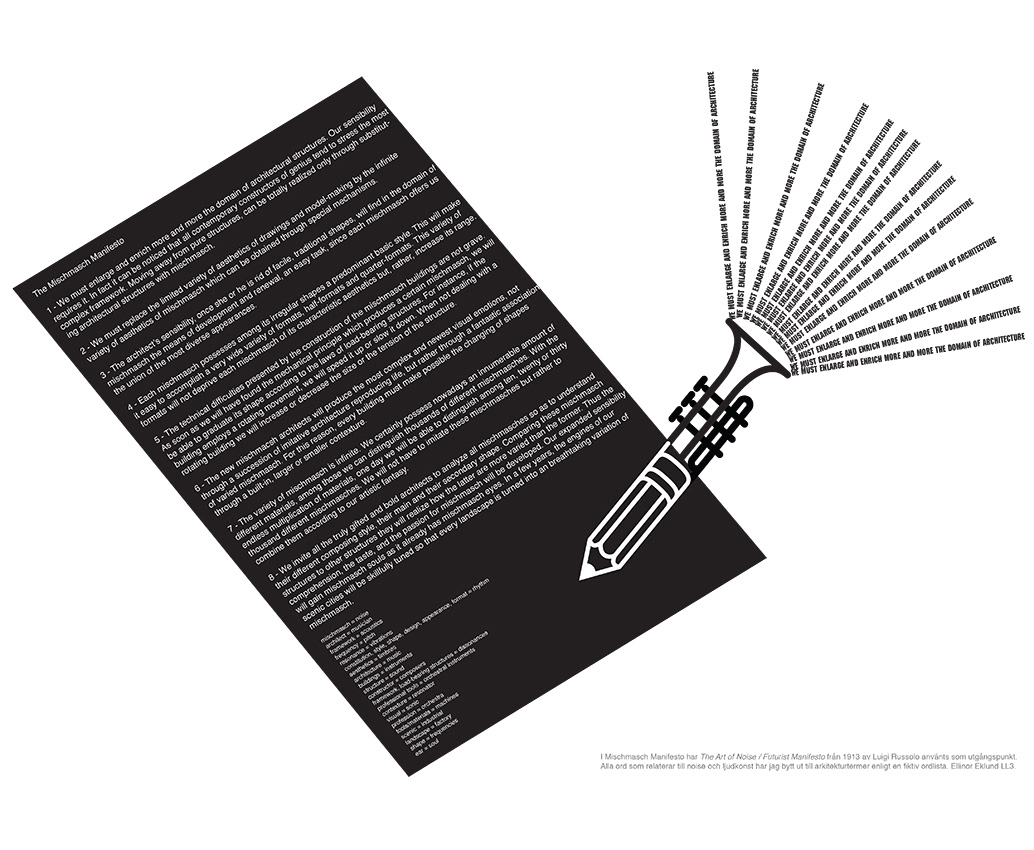
Drawing on The Mischmasch Manifesto, itself inspired by Luigi Russolo’s Futurist Manifesto from the early days of the Futurists, this project adopts an exploratory and associative design approach. Within this process, the fictitious material “Mischmasch”—composed of waste, remnants, and salvaged construction elements—was developed.
In this project I speculate on future architectural roles and material innovations, envisioning buildings as living systems that both produce and consume resources, inspired by Cradle to Cradle principles. Biomimetic strategies inform the design, integrating form, function, and ecological processes.
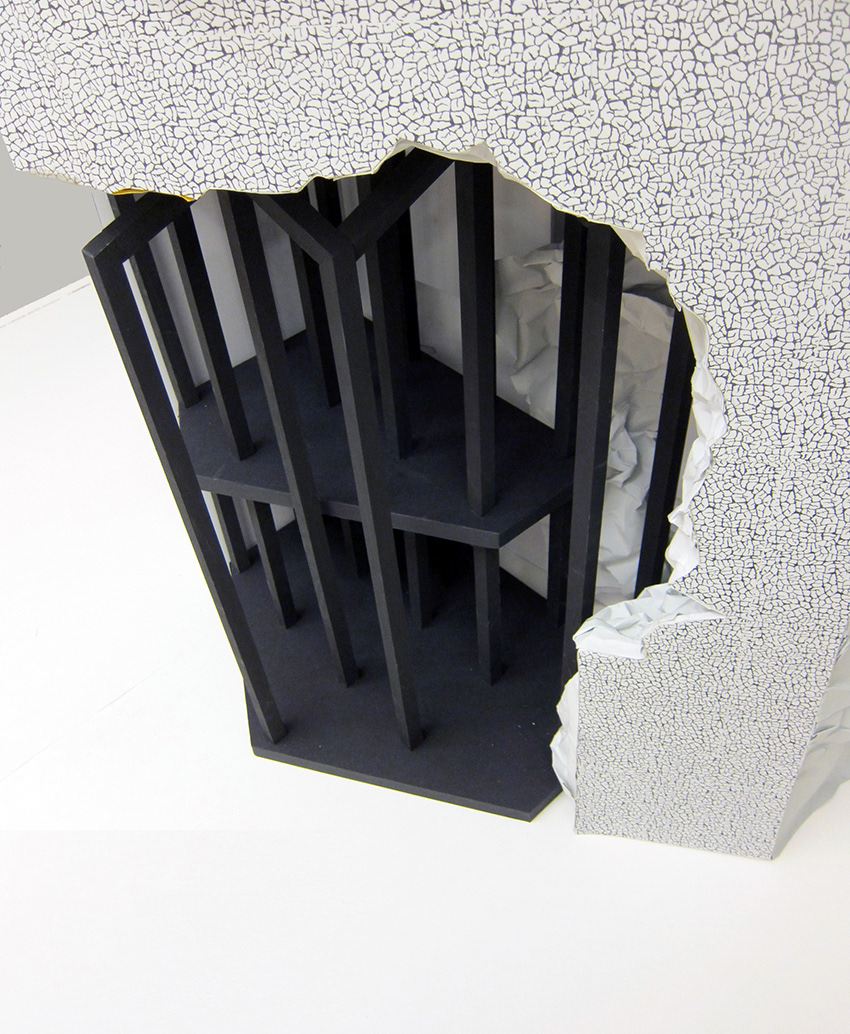
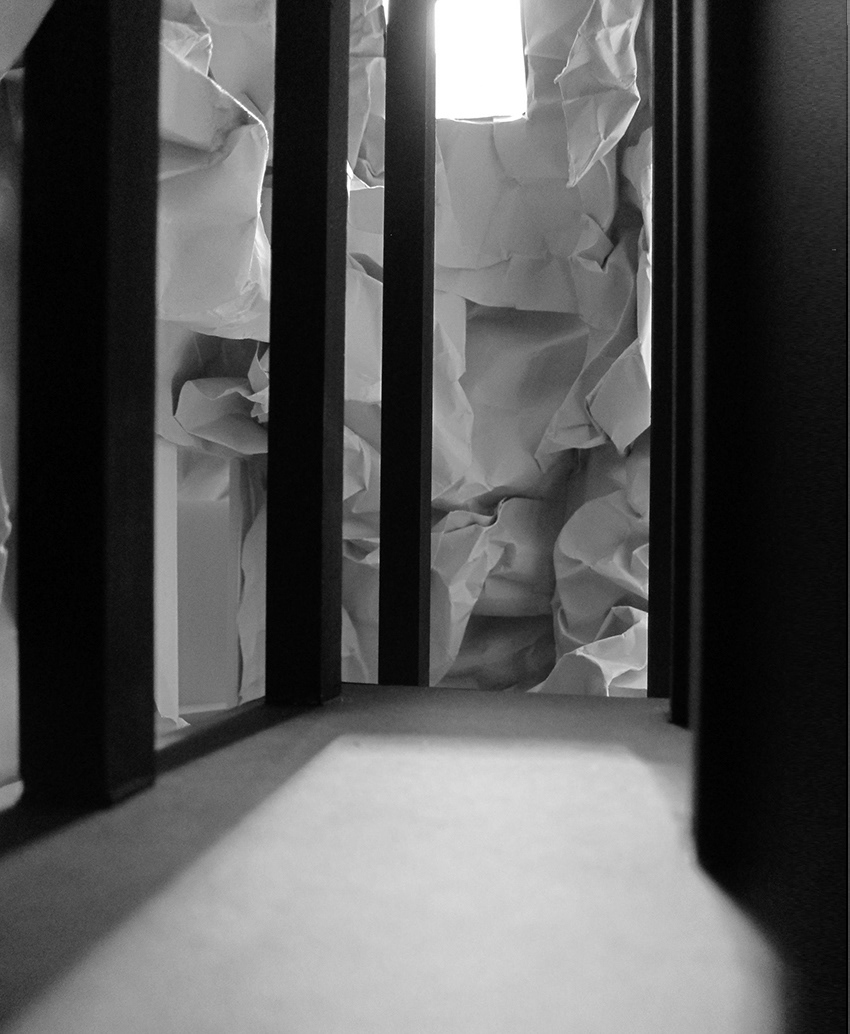
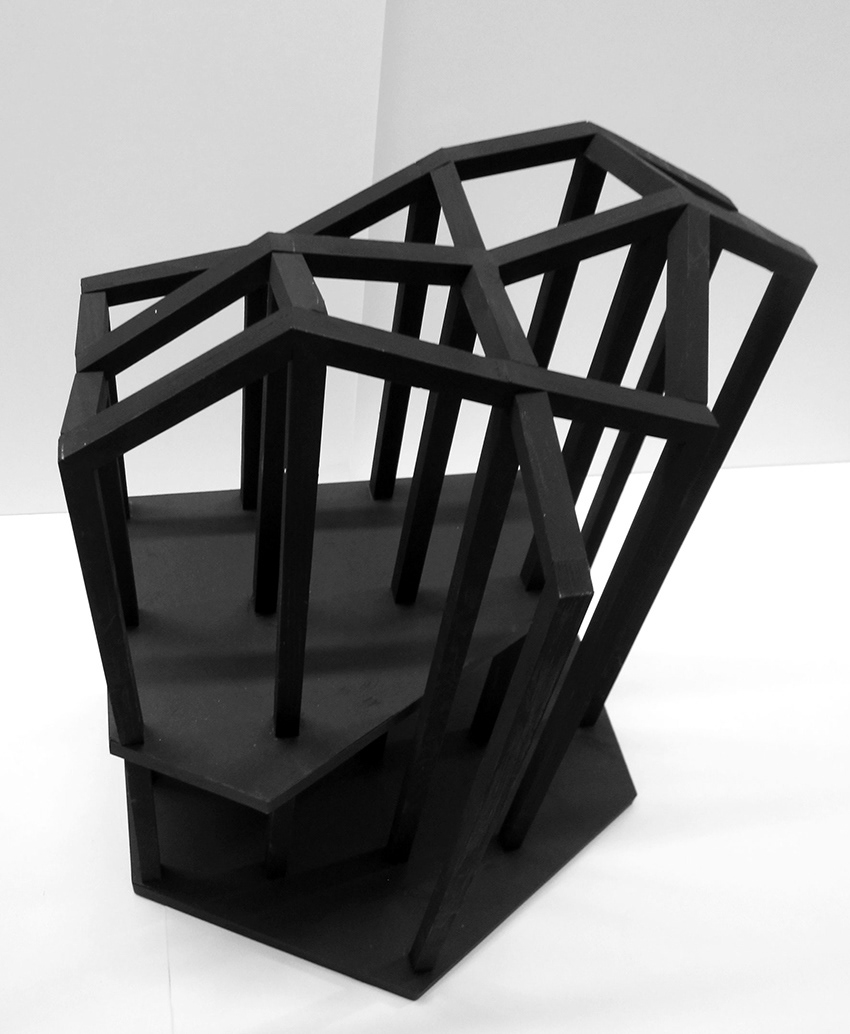
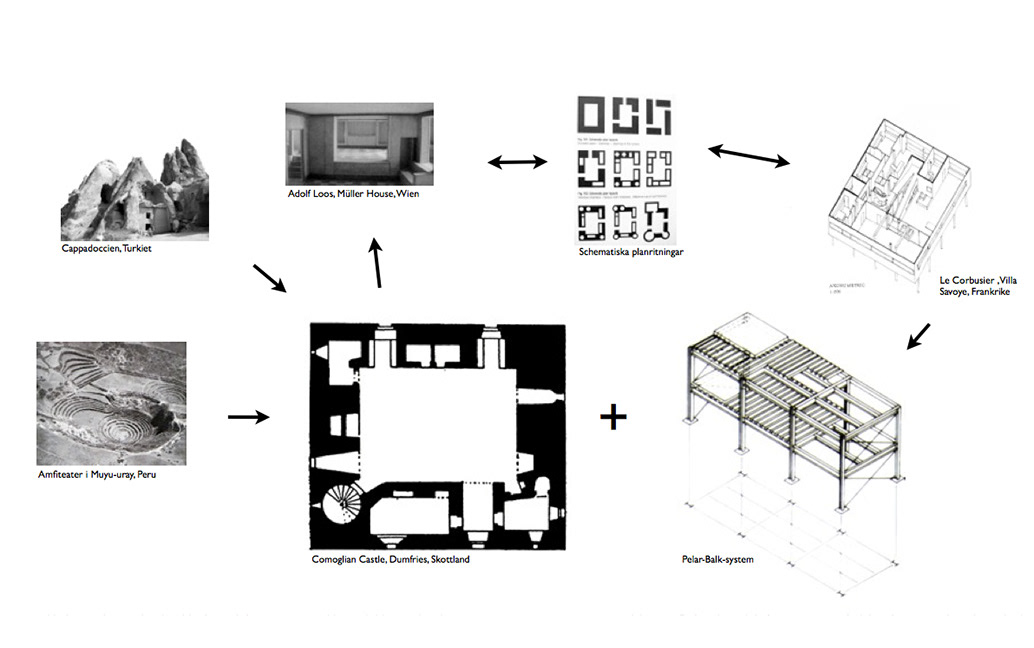
Structurally, the building combines a tunnel-like construction with a column-and-beam framework. A 1:40 scale model demonstrates two partially split levels, floor heights ranging from 7 to 19 metres, an 18-metre roof span, and a 4-metre column grid.
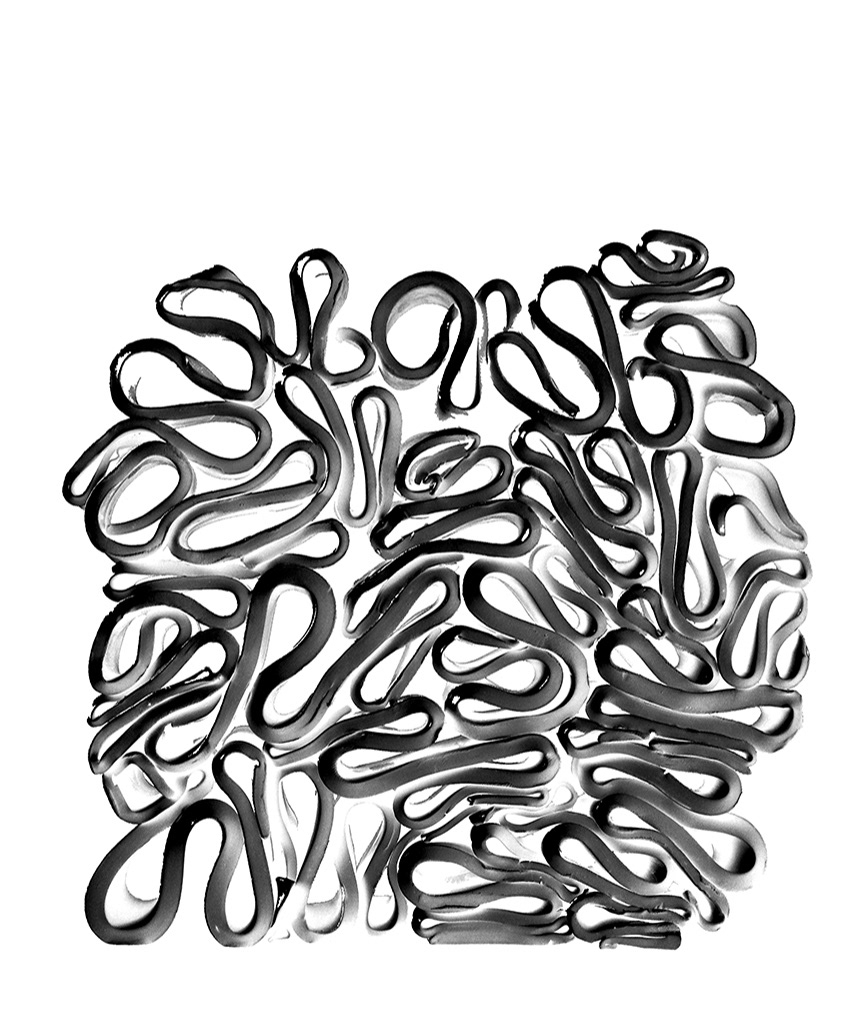
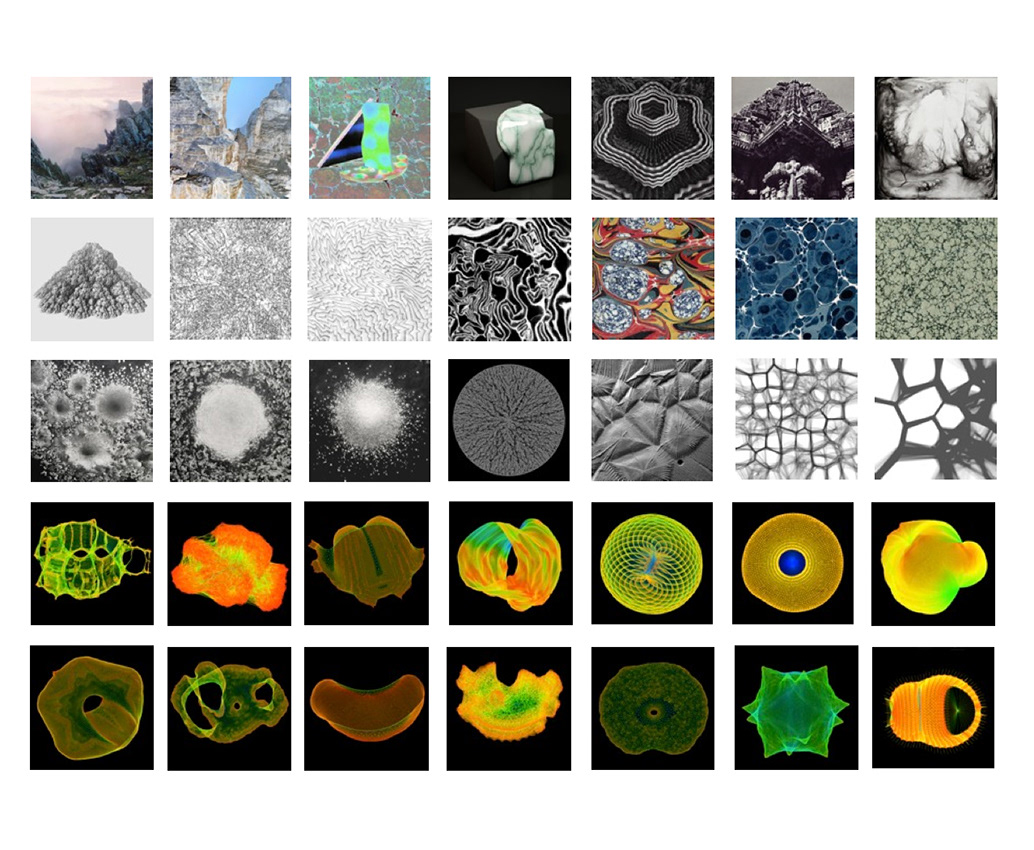
References and inspiration for the fictional material Mischmasch. Generative images, drawings, graphics, and installations by Ross Evertson, 1969. The book Living Architecture: India by Andreas Volwahsen. Energy and Motion Made Visible — Memories Arrested in Space by Robert Horvitz.
Red cabbage. Marbled Paper Designs by the artists Gregory Brellochs, Mongrel Nation, the Gallery of the University of Florida Sparse Matrix Collection, Leonardo Solaas, Peter K. Koch, Gerhard Richter, Mark Bradford, and others.
Red cabbage. Marbled Paper Designs by the artists Gregory Brellochs, Mongrel Nation, the Gallery of the University of Florida Sparse Matrix Collection, Leonardo Solaas, Peter K. Koch, Gerhard Richter, Mark Bradford, and others.
© Ella Eklund. All rights reserved