
Lost Landscapes, Diploma Projekt KTH School of Architecture, Stockholm.
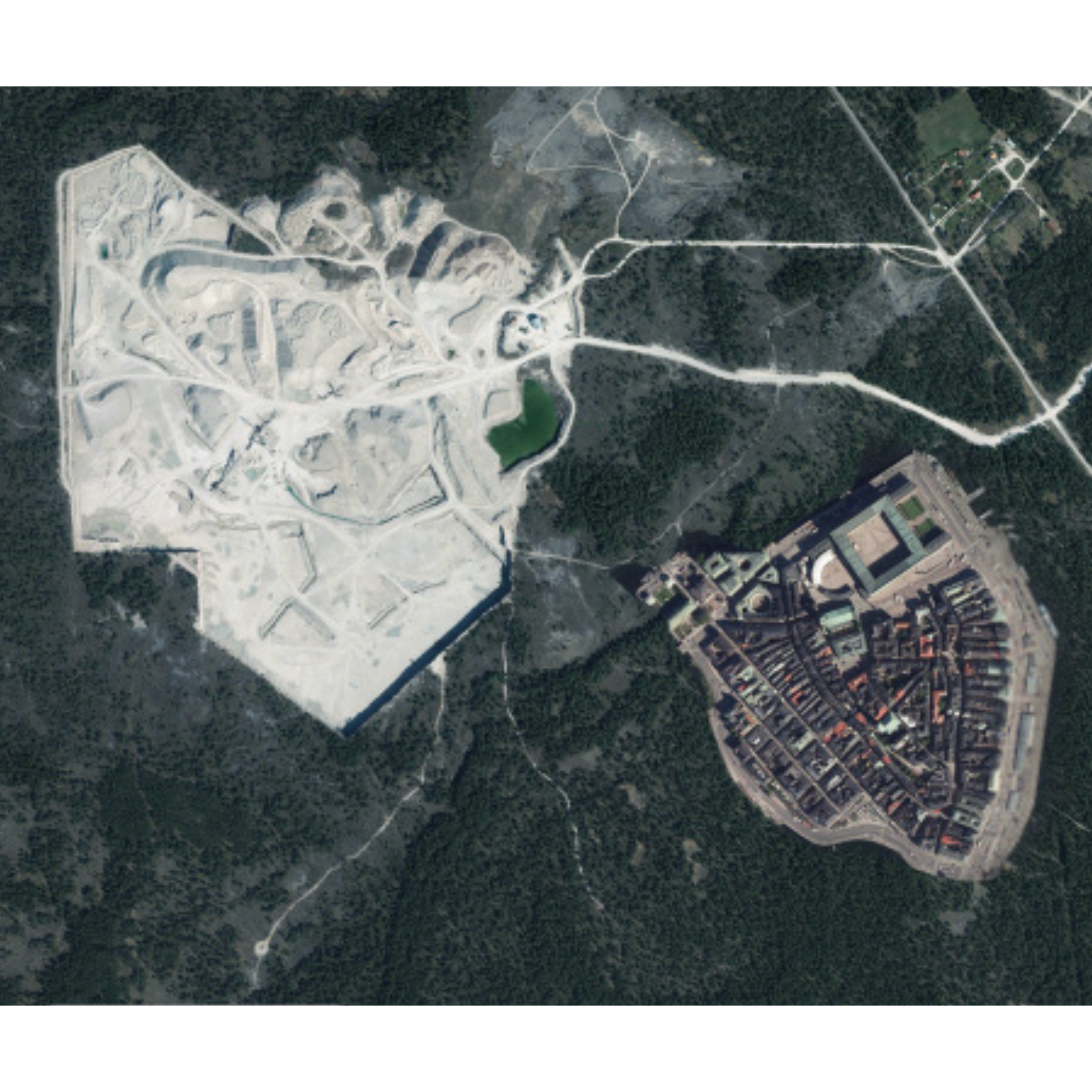
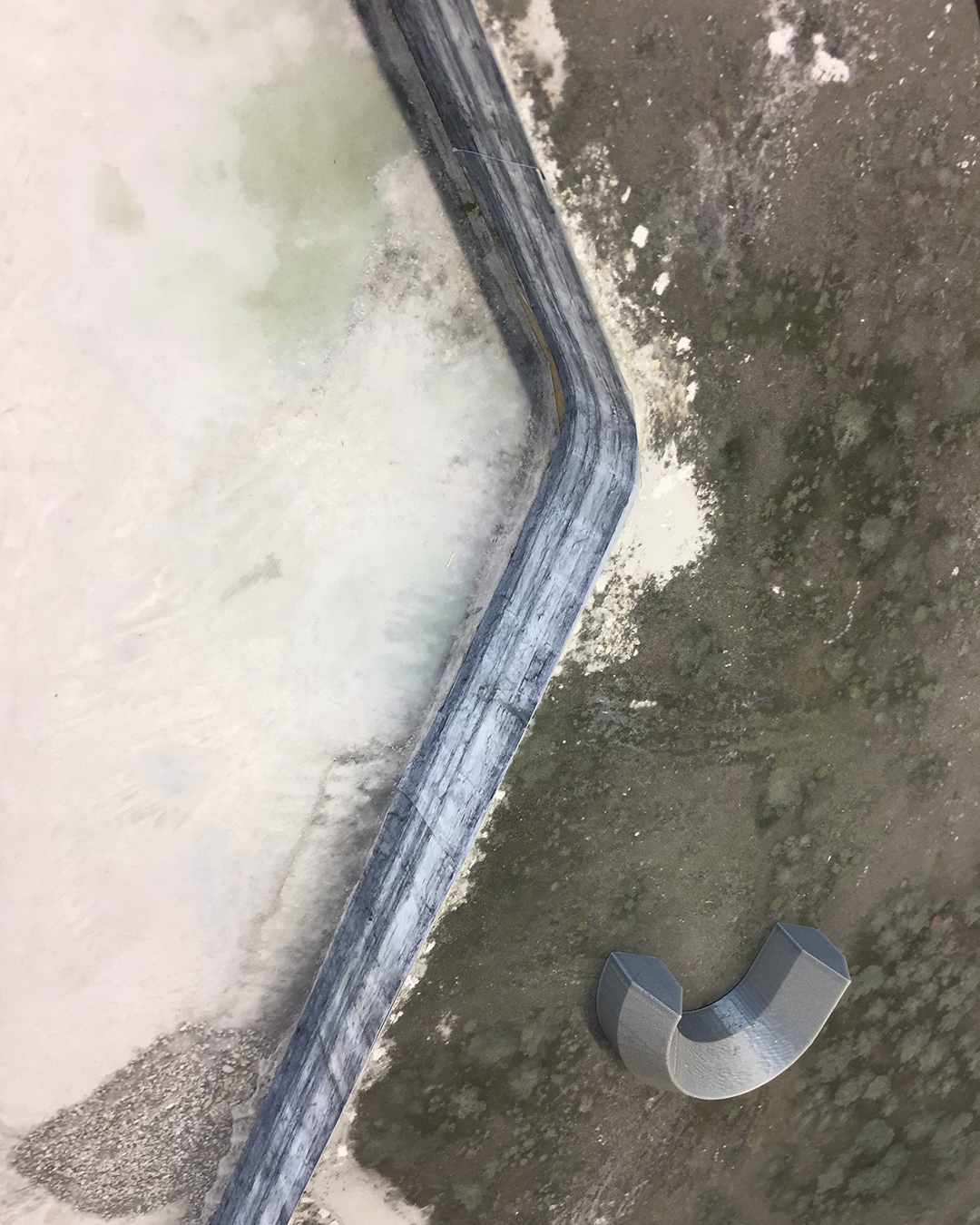
This project takes place in the area around Gotland´s largest lake, Bästeträsk in the northern part of the island.
We seldom pause to reflect on the origins of the materials that make up the built environment around us. These materials are drawn from real, physical landscapes.
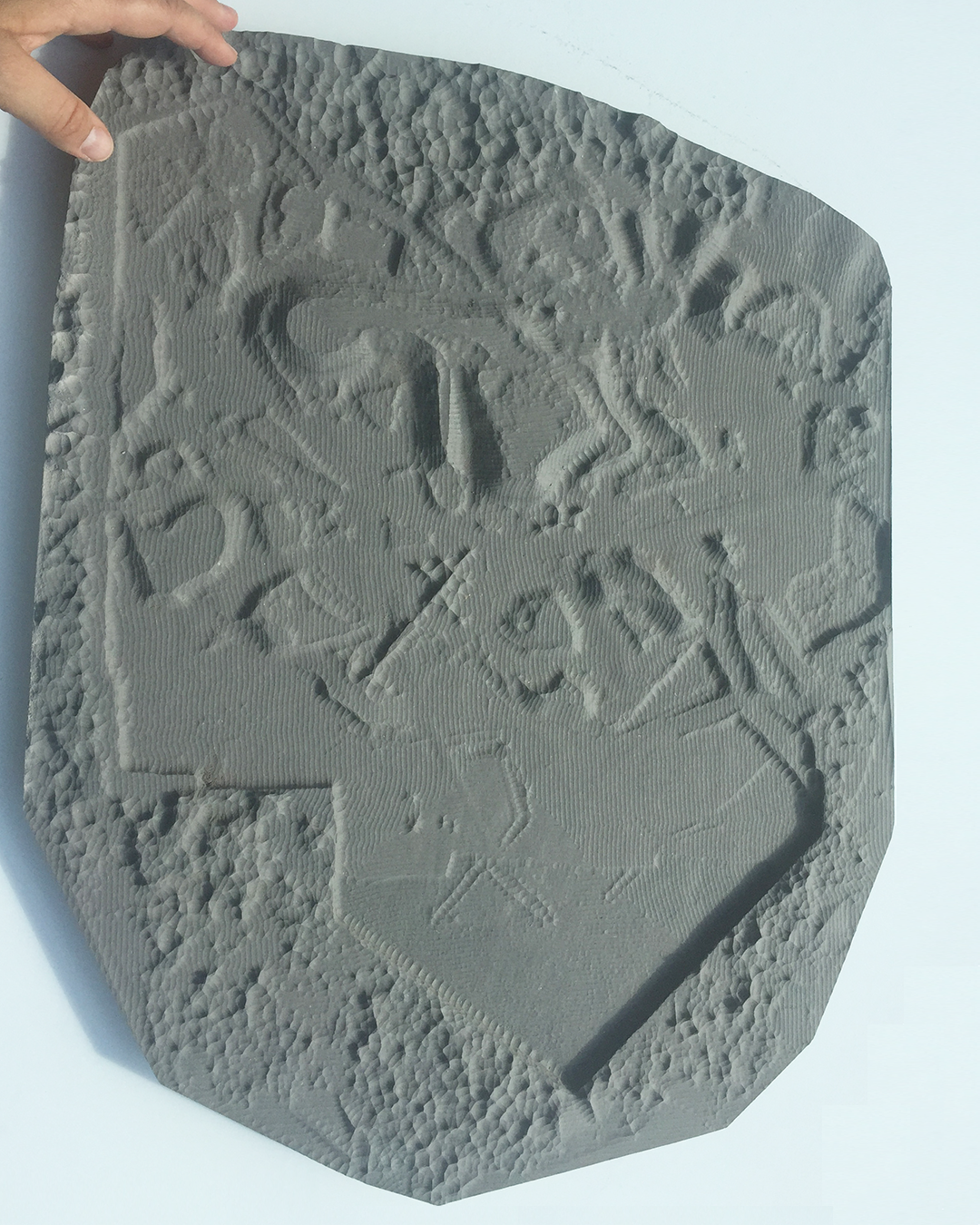
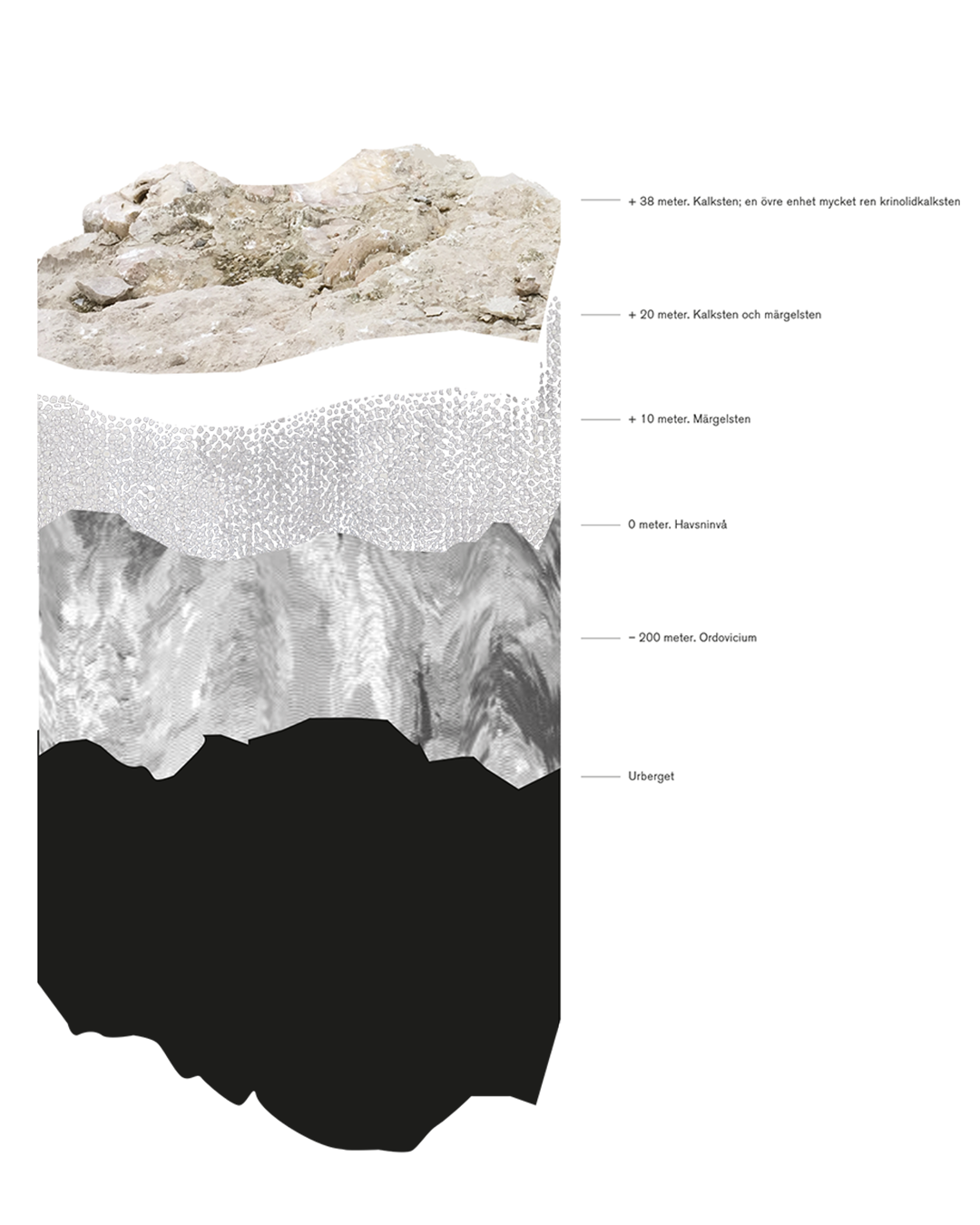
The conditions that define this place have been shaped over an immeasurably long span of geological time. The ground reveals exposed limestone bedrock, and beneath the surface lie the fossilized remains of shells and marine creatures that lived here 400 million years ago, when the climate was tropical.
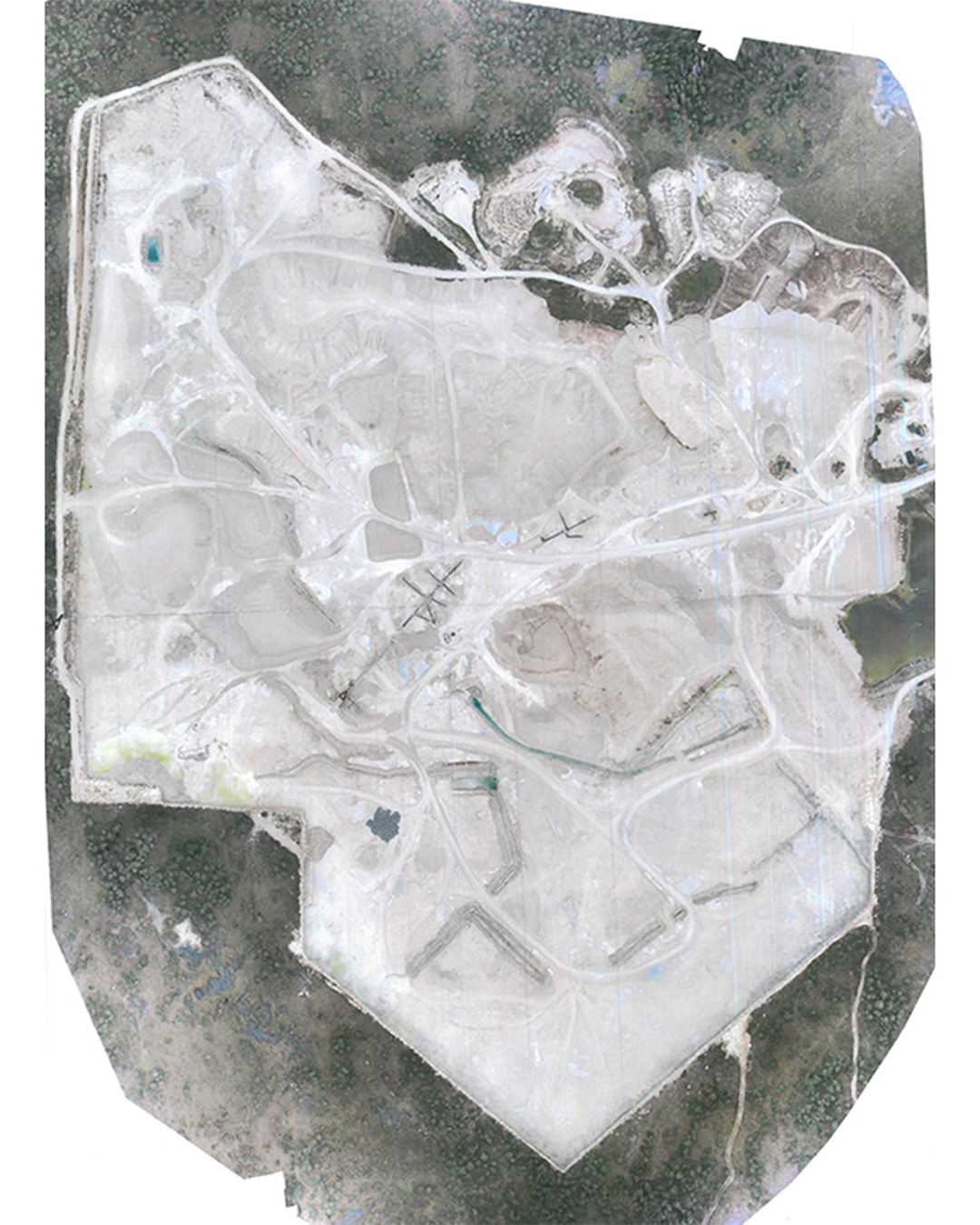
The site combines natural landscapes, cultural heritage, and large-scale limestone extraction, and is of national interest for conservation, recreation, and raw materials. A preliminary study for a future national park began two years ago, and the area may become one of Sweden’s new national parks.
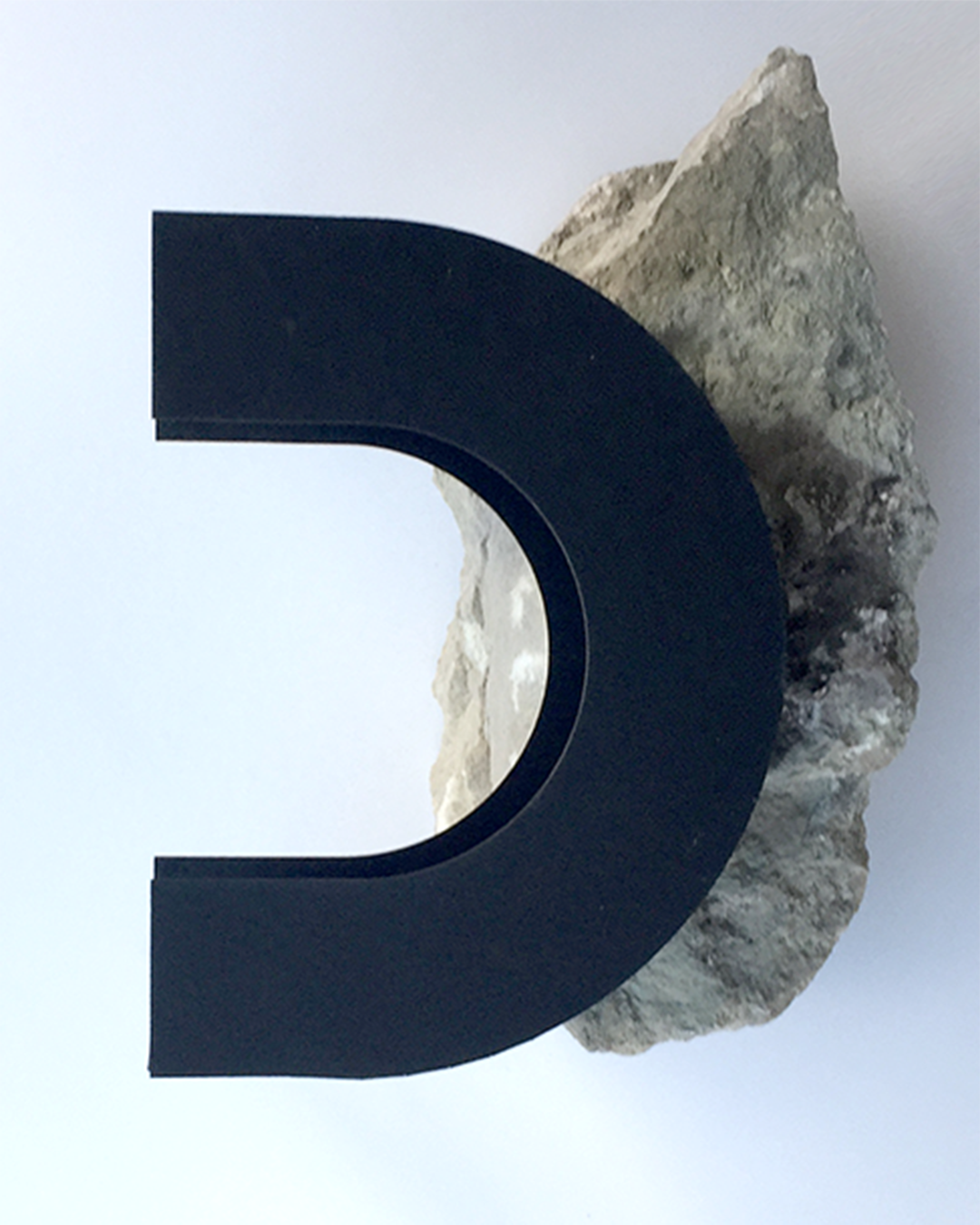
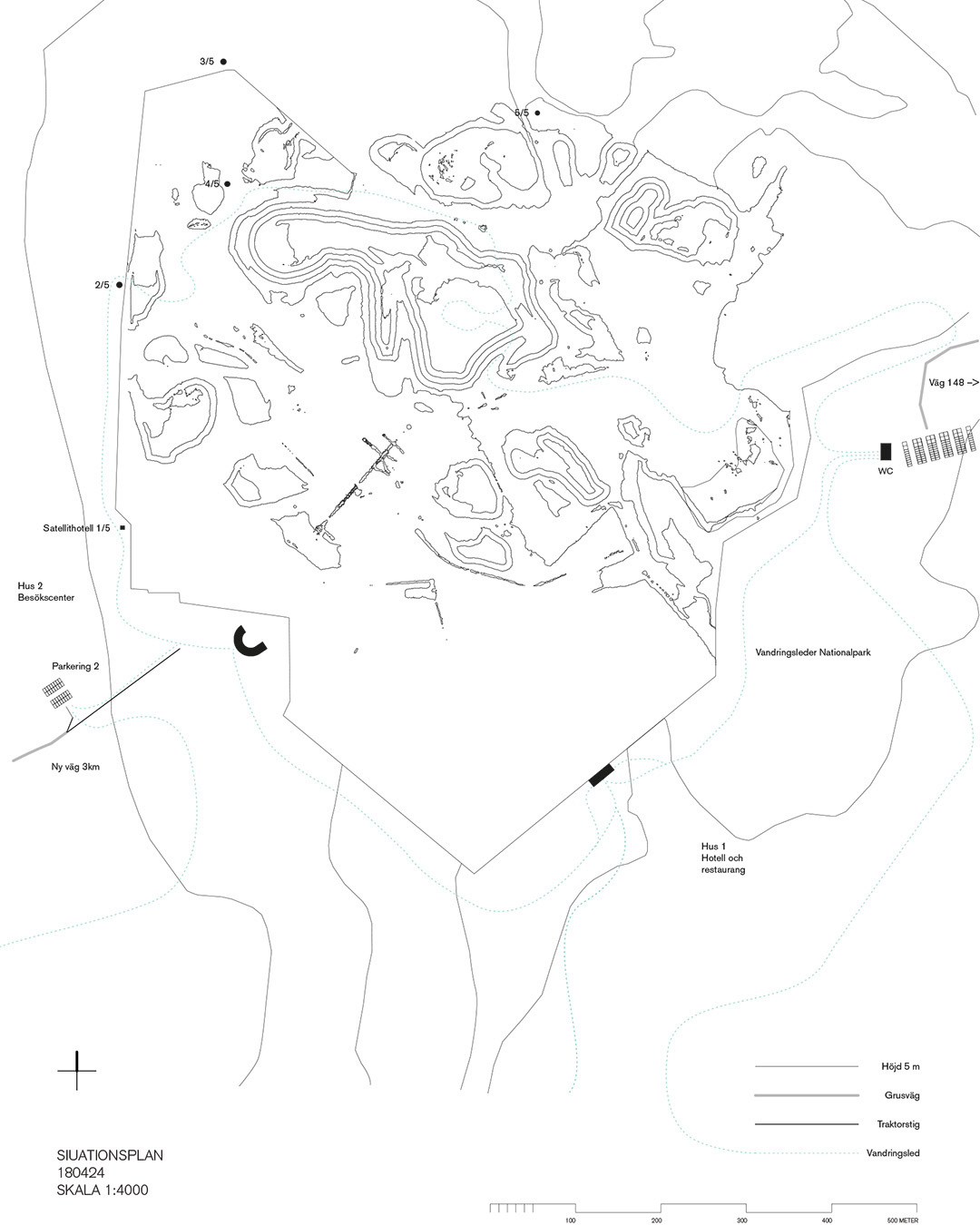
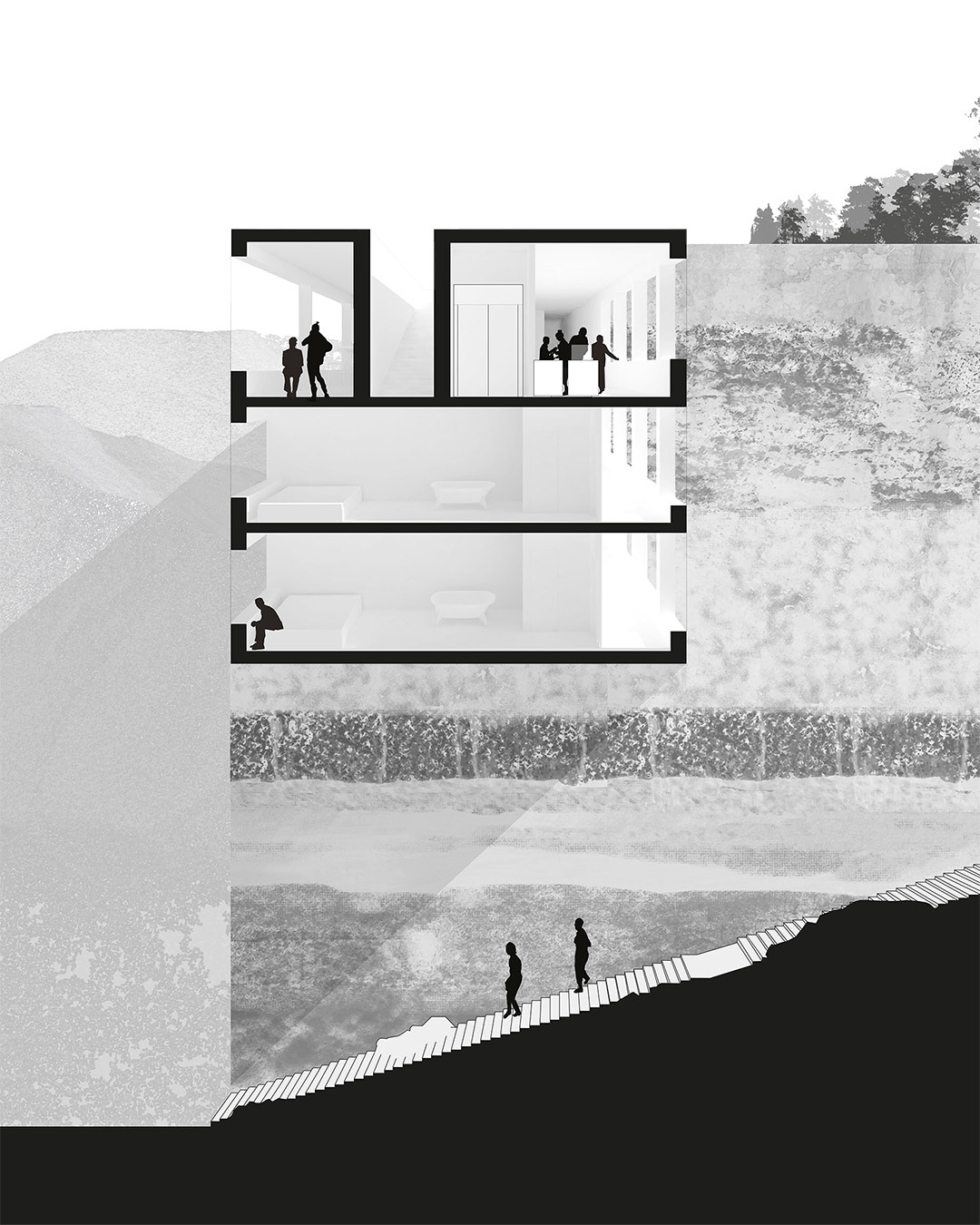
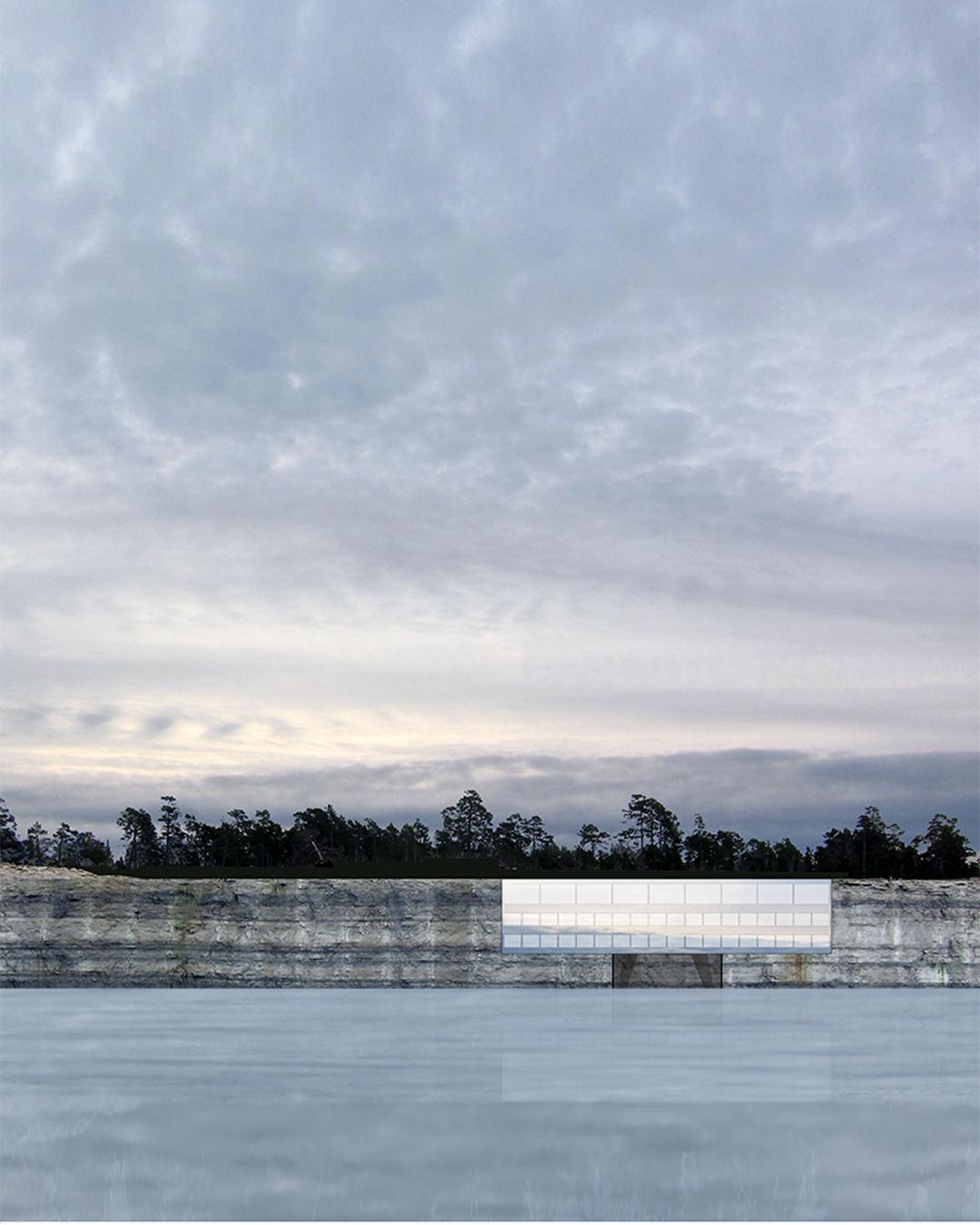
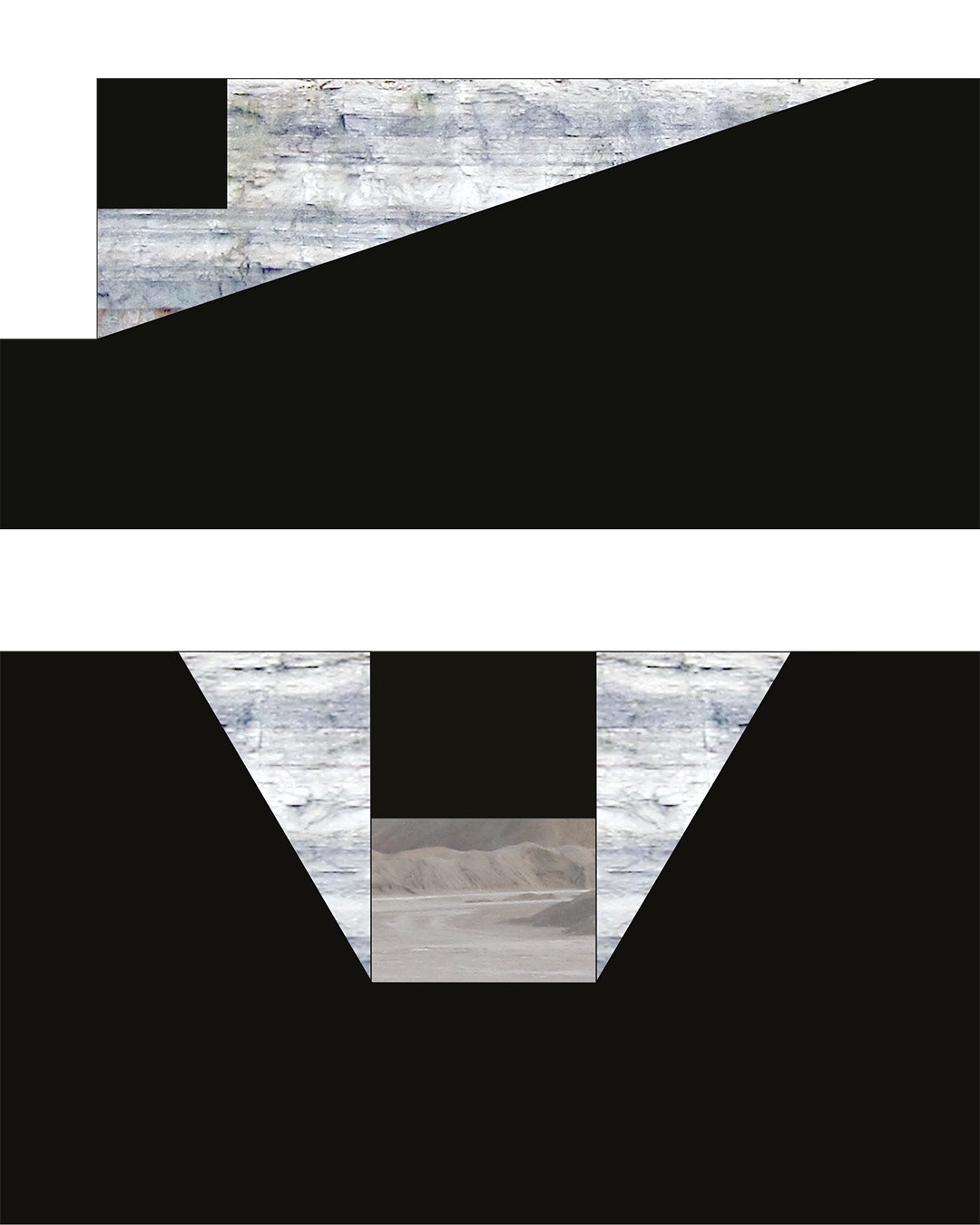
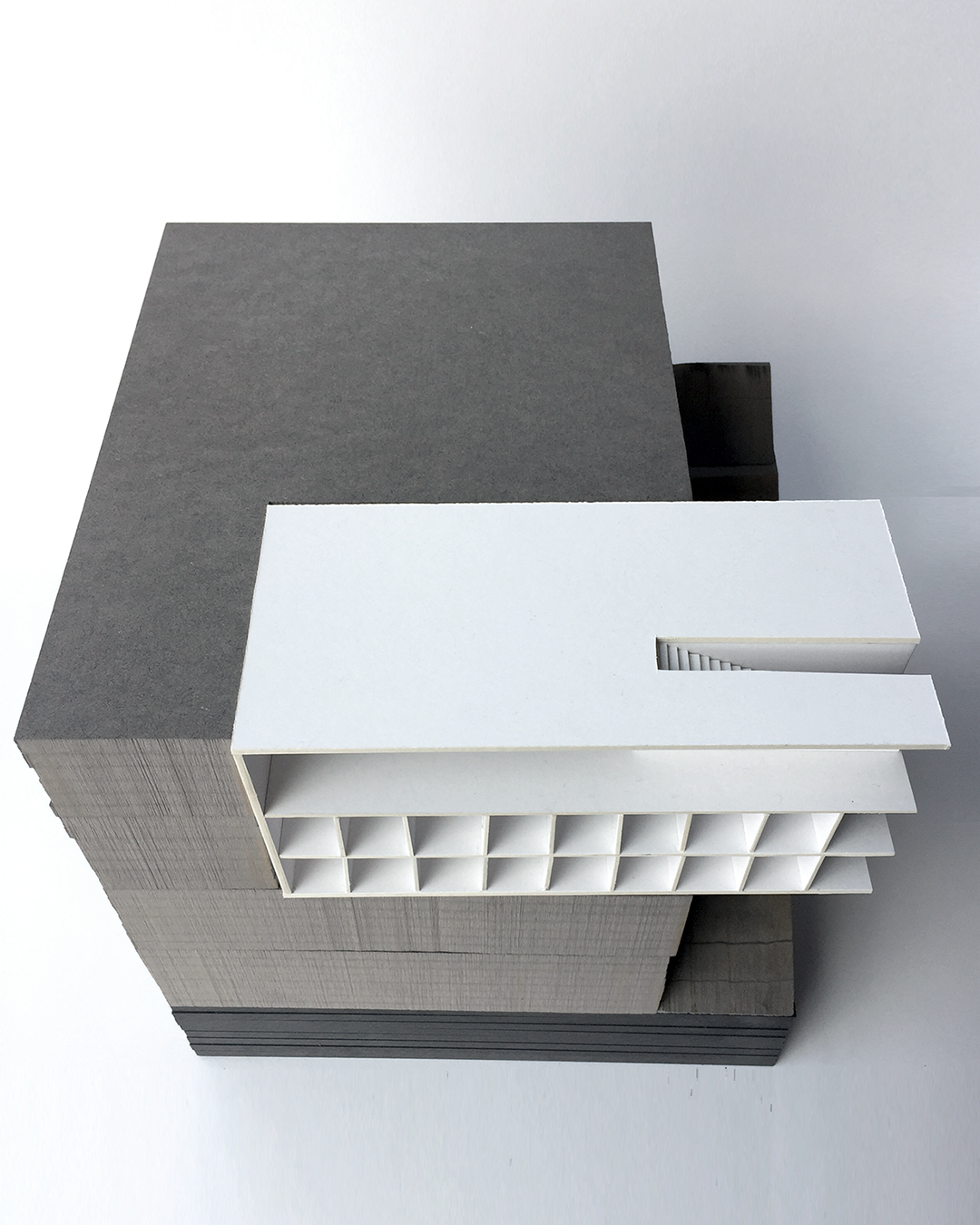
The proposed building is located on the boundary between preserved nature and industrial landscape. Its program focuses on observation of both industrial activity and natural change, which will begin when groundwater gradually fills the quarry, transforming it into an inland lake over 30 years.
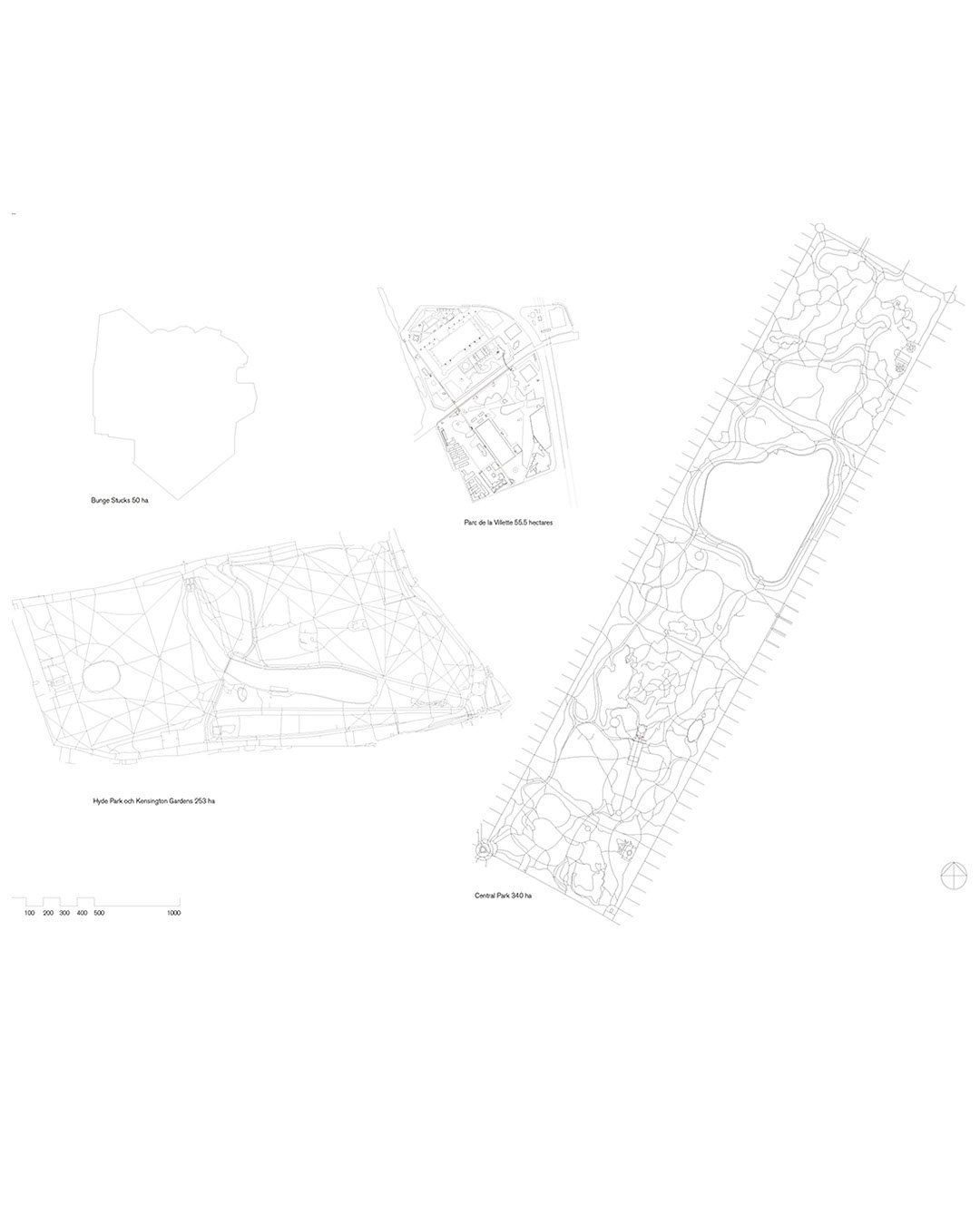
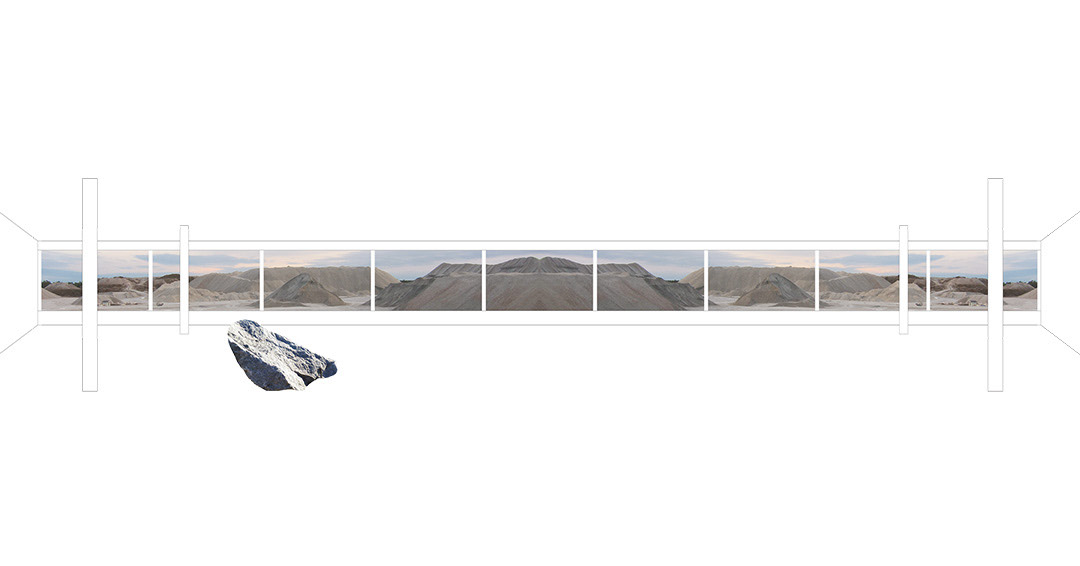
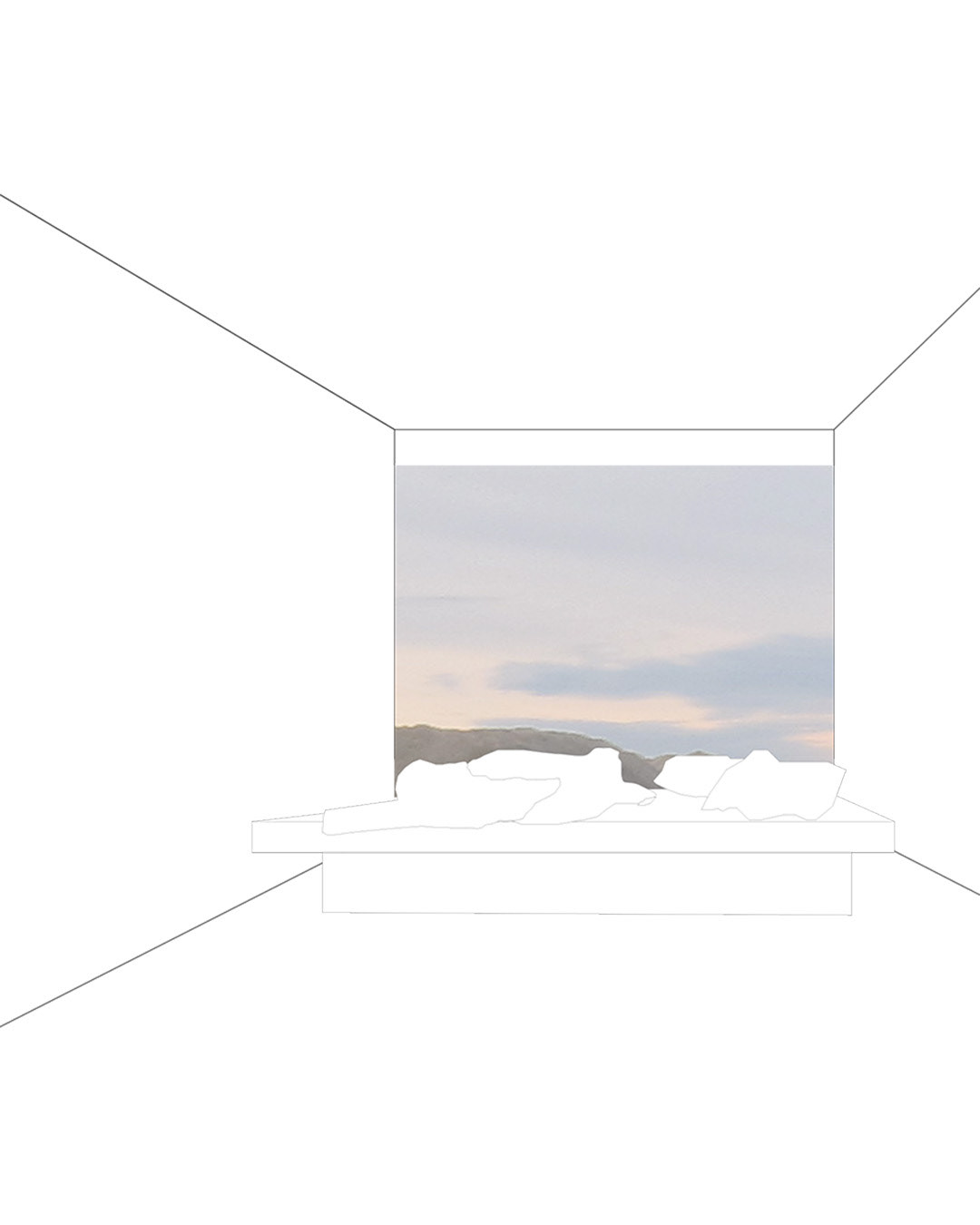
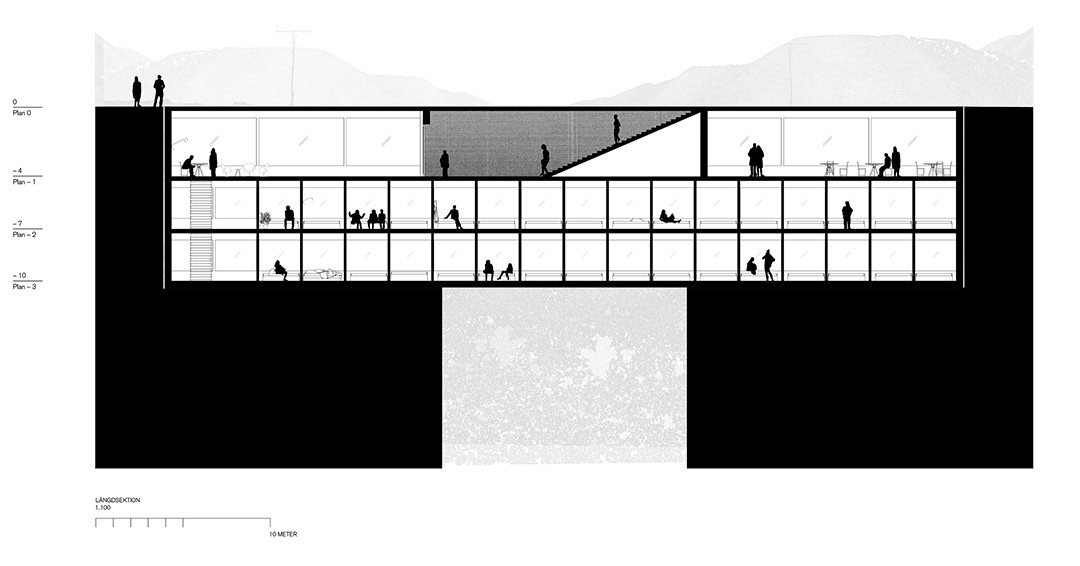
The building provides overnight accommodation. All public spaces face the 55-hectare quarry. It is designed as a 45 × 10 metre box embedded in the rock, with a sloping passage leading down into the quarry.
© Ella Eklund. All rights reserved